




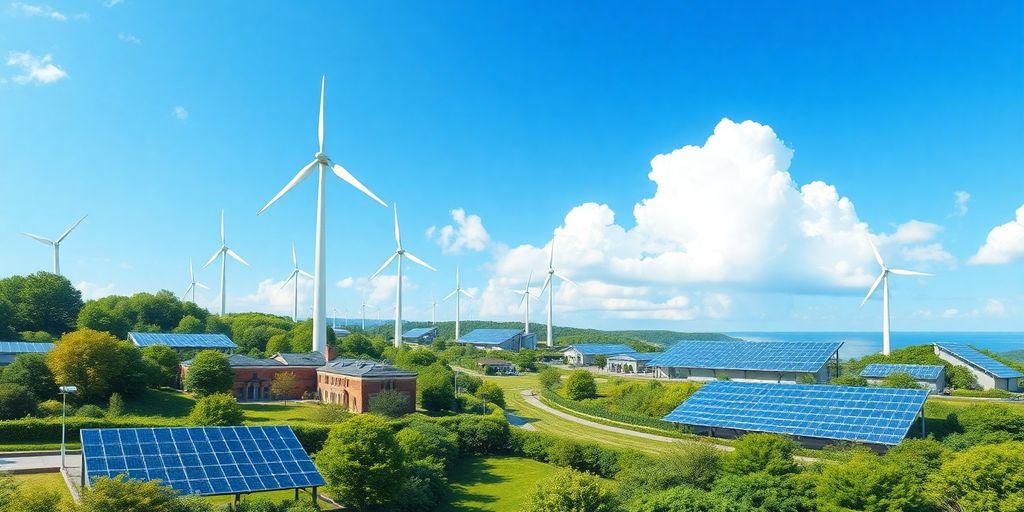
As we look towards 2025, businesses are facing a rapidly changing environmental landscape. The need for sustainable practices is more pressing than ever. Companies are not just reacting to changes; they are actively seeking ways to integrate sustainability into their core operations. This article explores key environmental trends in business that will shape the future, from innovative technologies to collaborative efforts between the public and private sectors.
Key Takeaways
- Sustainability strategies are evolving, focusing on integration into core business practices.
- Technological advancements like AI and clean technologies are reshaping resource management.
- Public-private partnerships are crucial for effective climate action and local sustainability initiatives.
- Regulatory changes are prompting businesses to adapt and enhance transparency in reporting.
- Addressing resource scarcity through innovative practices is essential for future resilience.
Evolving Sustainability Strategies
Course-Correcting Sustainability Approaches
Many companies are rethinking their old plans to become more sustainable. They look at their current methods and check what is or isn’t working. This helps them make clear changes that match both their business needs and environmental concerns.
Some steps they use are:
- Listing out old methods and spotting weak points.
- Setting new short-term and long-term goals.
- Tracking progress with simple, open data.
A quick look at efficiency can be seen in the table below:
| Step | Action Taken | Expected Result |
|---|---|---|
| Review | Look at current initiatives | Identify what needs change |
| Revise | Update policies and procedures | Better alignment with goals |
| Monitor | Check performance monthly | Quick fixes and adjustments |
Integrating Sustainability into Core Business
The idea here is to put eco-friendly practices right at the center of everyday business activities. Companies are trying to connect every part of their work with environmental rates of success. They mix in sustainable practices with production, finances, and even customer service. This can also mean working with outside experts for a green outlook.
Key methods include:
- Extending eco-friendly ideas into product design.
- Training teams on simple eco practices.
- Including sustainability questions in board meetings.
A blockquote that sums up this section:
Companies that put simple, clear green practices into the mix often see better teamwork and lower waste over time.
Fostering Green Talent Development
A new trend is to build up skills in the workforce about being kind to the planet. Organizations are now running training sessions and workshops that focus on environmental methods. These sessions are kept real and simple, so employees at all levels can understand them.
Some common approaches are:
- Regular team sessions on sustainability basics.
- Hands-on training with easy environmental tools.
- Small group projects to try out new green ideas.
Developing talent in this area means that more people bring fresh ideas to the table. It can pave a smoother road to a healthier future business model without overcomplication.
Companies that commit to revamping their strategies from the ground up are finding new ways to act, learn, and improve steadily.
Technological Innovations Driving Change
Digitizing Energy Grids
Our power networks are starting to work a lot smarter. Many companies are moving away from old-school, manual management to systems that can track energy use right away. By using sensors and smart controls, operations can be run more efficiently. This helps to cut down on wasted power and sometimes even saves money. For instance, companies often follow these steps:
- Check energy flows in real time
- Automatically adjust settings to balance loads
- Use data feedback to predict maintenance needs
A quick look at the benefits:
| Aspect | Digital Grid Benefit |
|---|---|
| Monitoring | Real-time data tracking |
| Control | Automated adjustments |
| Maintenance | Predictive upkeep |
For a closer look at smart systems, see modern grid tech.
AI’s Role in Resource Efficiency
Artificial Intelligence is making it easier to manage resources. Companies now work with AI to review huge amounts of data and spot ways to cut waste. It also helps create better planning for things like repairs and supplies.
- Analyze data to reduce usage
- Predict future needs
- Optimize production schedules
This shift has been remarkably effective in saving energy and reducing costs. An example is how companies use real-time information to make quick decisions, which adds a layer of safety and reduces unnecessary delays. Check out some current trends in AI trends.
Investing in technologies like AI is changing the game for resource management. Companies are not only saving money but also reducing their environmental impact by using smarter systems.
Emerging Clean Technologies
New clean technologies are also on the rise. Advances in energy tools mean that systems are now better at using power cleanly. Innovations such as improved solar panels, smarter wind turbines, and modern energy storage systems are being tested and put to work.
- Solar panels that capture more light
- Wind turbines with better designs
- Energy storage devices that keep power longer
These shifts are helping companies lower their environmental footprint. For more hints on the latest, check out clean tech advances.
Public-Private Partnerships for Impact

The role of public-private partnerships is growing as companies and governments team up to address environmental issues. With shared resources and ideas, it’s easier to get real-world results.
Collaborative Approaches to Climate Action
When public agencies and private companies work together, they mix different strengths in a way that’s hard to achieve alone. These joint efforts often pave the way for on-the-ground solutions that manage climate challenges. They turn planning into action, combining solid funding, local know-how, and strategic thinking. For instance, initiatives like sustainable partnerships are showing that strong teamwork can come with benefits such as:
- Broader reach across communities
- Improved resource sharing
- Faster implementation of eco-friendly projects
Public-private groups give communities the edge when luck and planning matter most. It’s an approach that brings measurable change, even when times are rough.
Localizing Sustainability Efforts
Local focus is key when trying to fix environmental issues. Projects that aim at the neighborhood level often get support from both local government and local business. This mix ensures that the projects match the community’s real needs.
A quick look at recent statistics shows how framing solutions locally can pay off:
| Year | Number of Local Programs | Average Community Benefit Score |
|---|---|---|
| 2023 | 15 | 78 |
| 2024 | 20 | 82 |
| 2025 | 25 | 85 |
These numbers tell us that when effort is focused locally, benefits are visible and growing steadily.
Scaling Initiatives through Joint Ventures
Sometimes local projects need to be bigger in order to make a long-term change. Joint ventures can help scale up these initiatives by pooling money, talent, and resources. This process usually follows a few simple steps:
- Start with a small pilot project to test ideas.
- Use feedback to improve and plan for expansion.
- Bring in more partners and stakeholders to increase reach and impact.
Working together in joint ventures makes it easier to reach more people and achieve broader impact without stretching resources too thin. This workplace of shared responsibility shows a model for future business strategies.
Navigating Regulatory Landscapes

Adapting to New Environmental Regulations
Companies find it tough keeping up with the sudden changes in rules set by lawmakers. In many cases, the shifts can be confusing and put extra pressure on every department. Staying on top of regulatory changes is non-negotiable for modern companies. One good start is to use clear steps:
- Check for regulatory updates weekly
- Assign a team to review new mandates
- Hold short sessions to update everyone on the changes
Companies that tackle changes head on often see better compliance and reduced risk. It’s a mindset of reacting quickly rather than waiting until things pile up.
It also helps to glance at insights like those found in the annual report for context and strategic direction.
Transparency in Corporate Reporting
When it comes to being open about business practices and numbers, companies need structured methods. One approach is to set up clear reporting standards and stick to them. Here’s a simple table that breaks down common requirements:
| Requirement | Description | Steps Recommended |
|---|---|---|
| Data Accuracy | Ensure all figures are checked carefully | Use auditing processes |
| Consistency | Follow a uniform format in reports | Build standard templates |
| Timeliness | Meet reporting deadlines without delay | Automate reminders |
Maintaining this level of detail helps build trust among investors, clients, and regulators alike.
Engaging Stakeholders Effectively
Connecting with those affected by a company’s practices can be straightforward if the right steps are taken. Some methods worth trying include:
- Organize regular community meetings or public forums.
- Use digital channels for quick updates and open dialogue.
- Actively gather and consider feedback from various groups.
These actions not only improve relationships but also lead to more informed and smoother decision-making. By bringing everyone into the conversation, businesses can better understand and meet community needs.
Addressing Resource Scarcity
Water Insecurity Challenges
Water is becoming a tight resource in many parts of the world. Communities are grappling with less predictable water supplies and higher demand. Our fresh water reserves are under unprecedented pressure as populations and industries grow.
Below is a simple table highlighting some hypothetical water scarcity figures:
| Region | Affected Population | Typical Scarcity Period |
|---|---|---|
| North America | 50 million | 3 months |
| South Asia | 150 million | 4 months |
| Africa | 200 million | 6 months |
Several factors contribute to water insecurity:
- Overuse of water resources in agriculture and industry
- Unpredictable weather patterns affecting replenishment
- Aging infrastructure leading to leakage and loss
Sustainable Resource Management
A shift in how resources are handled can ease pressure on essential supplies. Companies and local communities can adopt practices that align consumption with availability. Some effective measures include:
- Regular audits of resource use
- Adoption of smart monitoring technologies
- Training teams to identify waste and improve efficiency
By focusing on these steps, businesses can cut down waste and better match demand to supply. The rise of startup insights in various sectors also encourages innovative practices in resource management.
Smart, sustainable management is not just about cutting costs—it’s about preserving resources for tomorrow while keeping operations running smoothly.
Innovations in Circular Economy
Moving from a throwaway culture towards a more circular approach can significantly reduce resource depletion. Ideas in this space include repurposing waste, designing products for longevity, and creating systems where materials continuously reuse each other.
Here are three strategies driving circular economy experiments:
- Investing in recycling technology to transform waste into new materials
- Redesigning product life cycles to include take-back initiatives
- Partnering with other organizations to develop shared resource networks
This gradual shift towards a closed-loop model ensures that what we use today can help build a better, more resourceful tomorrow. It’s an ongoing process that requires persistent trial and error, but the rewards in sustainability can be substantial.
Climate Resilience and Adaptation
Building Resilient Supply Chains
Businesses are facing more supply disruptions because of wild weather events and other climate issues. Companies are starting to plan better by rethinking how they get materials and keep production going. One new idea is to work with local partners and expand backup plans to cut the delays that come from long supply lines. For example, a core resilience approach means gathering multiple regional sources, building nearby storage, and often improving communication with vendors.
A few steps for better supply chains include:
- Checking supply risks regularly.
- Setting up alternative routes and sources.
- Ensuring that key parts can be replaced quickly.
Our focus here is to build systems that stay strong even when sudden problems strike.
This method is not just about dealing with delays; it’s about preparing well enough to keep things running even if the unexpected happens. It’s a practical way to keep business steady.
Investing in Climate-Resilient Infrastructure
Companies are putting money into projects that help protect physical assets from bad weather. When you look at budgets, here’s an idea of where investment can go:
| Infrastructure Item | Estimated Cost ($k) | Impact Level |
|---|---|---|
| Bridge and Road Reinforcements | 150 | Medium |
| Flood Defense Installations | 200 | High |
| Eco-Friendly Office Upgrades | 100 | Low |
Steps to move forward include:
- Checking what risks each facility faces.
- Choosing projects that can reduce these risks in cost-effective ways.
- Spreading investments across different areas to balance cost with reliability.
Even when funds are tight, small measures can add up to a safer future.
Community Engagement in Adaptation Strategies
When a crisis hits, communities matter a lot. Local groups and workers often notice changes first and know what might work on the ground. Companies are teaming up with communities to get better ideas and share resources.
Reasons to get involved:
- Communities understand regional needs better.
- Partnerships often lead to more practical solutions.
- Collaboration builds mutual trust between companies and locals.
These interactions help pinpoint the best local responses, making sure that planning efforts fit actual conditions on the ground. It’s a way to blend business objectives with real-life experiences, building a safety net that supports everyone in the neighborhood.
The Future of Energy Solutions
The energy world is shifting, and it’s time to look at the big picture. Around 2025, we’re seeing major changes. One thing to note is the rise of new approaches that mean we might soon see different kinds of energy systems that go beyond what we’re used to. Along the way, key trends like energy trends are reshaping the scene.
Reassessing Nuclear Energy’s Role
There’s a renewed look at nuclear power as a reliable option. Even though nuclear power has been around for decades, many are rethinking how it fits into current energy needs. Some steps include:
- Looking at updated safety measures
- Checking long-term waste management plans
- Evaluating new reactor designs that promise better performance
Nuclear energy might serve as a dependable bridge to a less carbon-heavy future.
Transitioning to Renewable Energy Sources
Renewable energy is not just a buzzword these days; it’s a vital part of everyday energy supply. Wind, solar, and hydro power are all gaining ground. This shift means:
- Lowering emissions by replacing older power setups
- Investing in practical energy storage methods
- Emphasizing local community projects
These changes can help stabilize energy costs and offer a cleaner alternative for communities.
Innovations in Energy Storage
In a world where energy can come in bursts and then ebb, storage is a big deal. Better methods for storing energy are making renewable sources more practical. Some highlights include:
- New battery tech that holds charge longer
- Research into alternative storage like compressed air
- Smart grid systems that manage surplus energy better
Below is a simple table that showcases parts of each energy pillar:
| Energy Concept | Expected Trend | Key Focus Area |
|---|---|---|
| Nuclear Energy | Moderate rise | Safety and efficiency |
| Renewable Energy Sources | Significant | Clean, local generation |
| Energy Storage Innovations | Growing fast | Longevity and smart systems |
Looking at these choices, we see a path where different energy methods mix to cover all bases. This balanced view might help steer us toward a future where energy is cleaner and more reliable.
Looking Ahead: Embracing Change in Business
As we gear up for 2025, it’s clear that businesses can’t just sit back and wait. The world is changing fast, and those who want to stay relevant need to adapt. Climate issues, resource shortages, and shifting regulations are all part of the new normal. Companies that embrace sustainability won’t just survive; they’ll thrive. It’s about finding ways to innovate while also being responsible. Collaboration will be key, whether that’s teaming up with other businesses or working with governments. The future is uncertain, but one thing’s for sure: businesses that prioritize the planet will lead the way.
Frequently Asked Questions
What are sustainability strategies for businesses?
Sustainability strategies are plans that companies make to reduce their impact on the environment. This can include using less energy, reducing waste, and making products that are better for the planet.
How can technology help with sustainability?
Technology can help businesses be more sustainable by creating smarter energy systems, using artificial intelligence to save resources, and developing new clean technologies.
What role do public-private partnerships play in sustainability?
Public-private partnerships involve cooperation between government and businesses to tackle environmental issues. They work together to create solutions that benefit both the community and the environment.
Why is it important to follow environmental regulations?
Following environmental regulations is important because they help protect the planet. Companies that comply with these rules can avoid fines and improve their reputation.
What challenges does resource scarcity bring to businesses?
Resource scarcity means that some materials, like water and raw materials, are becoming harder to find. This can make it difficult for businesses to operate and can increase costs.
How can companies build climate resilience?
Companies can build climate resilience by creating strong supply chains, investing in infrastructure that can withstand climate impacts, and involving communities in planning for changes.
