




As we gear up for 2025, the landscape for small businesses is changing rapidly, especially in technology. Keeping up with the latest small business tech trends is essential for entrepreneurs looking to stay competitive and efficient. In this article, we’ll explore the most important tech trends that small businesses should watch out for in 2025. From artificial intelligence to sustainability, these trends can help shape the future of your business.
Key Takeaways
- Artificial Intelligence will streamline operations and enhance customer interactions.
- Cloud Computing is crucial for remote accessibility and collaboration.
- Cybersecurity tools are becoming essential for protecting sensitive data.
- E-commerce platforms will continue to grow, making online sales a priority.
- Sustainability practices are not just trendy; they’re becoming a business necessity.
1. Artificial Intelligence
AI is no longer just a futuristic concept; it’s rapidly becoming a practical tool for small businesses. It’s moved past the hype and is now delivering real, tangible benefits. I mean, think about it – AI can handle everything from customer service to data analysis. It’s pretty wild.
AI adoption has grown rapidly over the past few years for both employees and leaders.
Here’s how AI is making waves:
- Customer Service: Chatbots are getting smarter, providing instant support and freeing up your team.
- Marketing: AI can personalize campaigns, targeting the right customers with the right message.
- Operations: From inventory management to supply chain optimization, AI is streamlining processes.
AI-powered search, like the one in Zoom, doesn’t just search your chats. It searches everything: the docs you’ve made, your meeting summaries, your recording transcripts, and more. It’s really helpful for small businesses who don’t have time to go rifling through different files to find where things are stored.
AI is also becoming more accessible. The cost of AI technology has dropped significantly, making it more accessible to small businesses. A survey from October 2023 found that the average small business utilizes four AI tools, with nearly a quarter (24%) employing at least seven tools. This indicates a growing trend of AI adoption among SMBs (small and medium-sized businesses).
Hardware vendors are beginning to develop AI PCs, adding neural processing units to the computer to support the graphics processing unit (GPU). For small business owners, this means equipment that is more performant and better suited to run AI applications. As the hardware systems to support AI become more mature, this will also help decrease the cost of AI, making it more accessible.
2. Cloud Computing

Cloud computing is no longer a futuristic concept; it’s the present reality for many small businesses. It’s like moving your entire office infrastructure to a super-secure, always-available online space. This shift offers incredible flexibility and cost savings, allowing small businesses to compete with larger corporations without the hefty price tag.
Think about it: no more expensive servers humming in the back room, no more worrying about data backups, and the ability to access your work from anywhere with an internet connection. It’s a game-changer.
- Reduced IT Costs: Cloud services eliminate the need for expensive hardware and IT staff.
- Increased Scalability: Easily adjust your resources as your business grows.
- Improved Collaboration: Teams can work together seamlessly, regardless of location.
Cloud computing isn’t just about saving money; it’s about enabling innovation. Small businesses can now access cutting-edge technologies and tools that were previously out of reach, allowing them to experiment, adapt, and grow faster than ever before. It’s about leveling the playing field and giving small businesses the power to compete in a global market.
Cloud computing is also about flexible payment models that make it easier and more affordable for small businesses to break past the cost barrier. Cloud contact center software has experienced significant growth, transforming the way businesses interact with their customers. This shift is driven by several factors, including the desire for greater flexibility, scalability, and cost-effectiveness.
3. Remote Work Solutions
The shift to remote work, which really took off around 2020, is still going strong. Sure, some companies are calling people back to the office, but the flexibility of remote work has changed how small businesses operate. It presents both good things and challenges. Being able to work remotely is now a big deal for attracting good people.
With remote work, small businesses aren’t limited to hiring people who live nearby. This means they can find talent from all over, which can bring new ideas and creativity to the team. However, it can be harder to keep a strong company culture when everyone isn’t in the same place.
To make remote work work, small businesses need to focus on good communication. Regular video calls and online team activities can help people feel connected. Also, remote work can save money on office costs, which can then be used for employee benefits or better technology. As remote work keeps changing, small businesses need to adapt to create a good environment for their employees. The increase in remote and flexible work has created a surge in demand for collaboration technology.
- Remote work is here to stay, and small businesses need to adapt to thrive.
- Good communication is key to maintaining team cohesion.
- Remote work can lead to cost savings and access to a wider talent pool.
Remote work has changed the game for small businesses. It’s not just about letting people work from home; it’s about rethinking how we build teams, communicate, and create a company culture that works for everyone, no matter where they are.
4. Cybersecurity Tools
Cybersecurity is no joke, especially for small businesses. We’re not just talking about protecting your data; it’s about protecting your reputation and your bottom line. Cyber threats are constantly evolving, so your defenses need to keep up. It’s not enough to just have a firewall; you need a comprehensive strategy.
Think of it this way:
- Strong passwords are like locking your front door.
- Regular software updates are like patching holes in the roof.
- Employee training is like teaching everyone in the house how to spot a burglar.
Ignoring cybersecurity is like leaving your business wide open for anyone to walk in and take what they want. It’s a risk you simply can’t afford to take in 2025.
Cybersecurity spending is expected to increase, and for good reason. Small businesses are prime targets because they often lack the resources of larger corporations. But that doesn’t mean you’re helpless. There are affordable and effective tools available to help you stay safe. Investing in cybersecurity is an investment in your future.
5. Digital Payment Systems
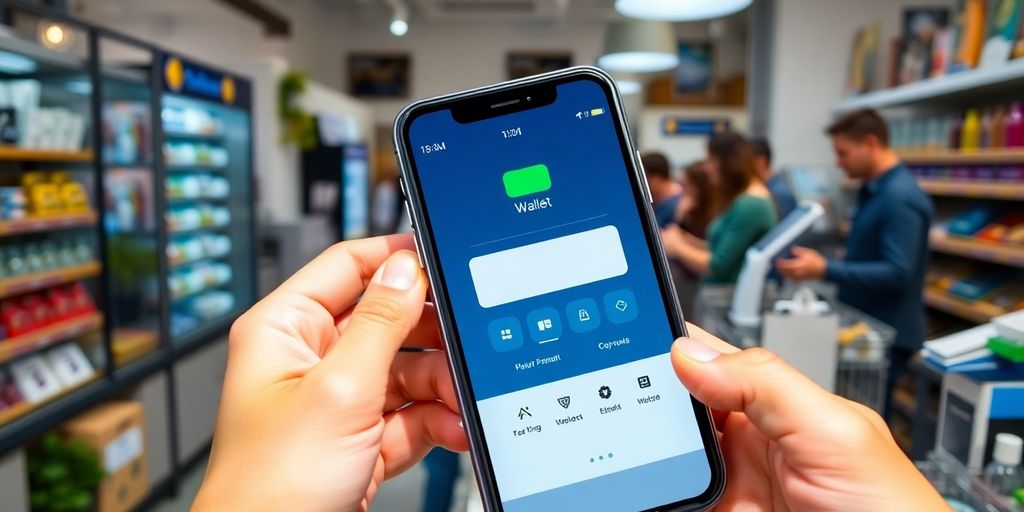
Okay, so digital payments. It’s not exactly news that people are using their phones and cards more than cash these days, but the tech behind it is still changing fast. By 2025, expect even more innovation in how small businesses handle transactions. It’s all about making it easier for customers to pay and for businesses to get paid, without all the hassle.
The shift towards digital payment systems is undeniable, offering speed and convenience.
Think about it: you’re at a farmer’s market, and every vendor has a different payment setup. Some take cards, some only do cash, and one is trying to get you to download their weird new app. It’s a mess. The future is about streamlining all that.
- Contactless payments will be even more widespread.
- Mobile wallets will become the norm, not the exception.
- Instant transfers will be expected, not a bonus.
Small businesses need to adapt to these changes or risk losing customers. It’s not just about accepting credit cards anymore; it’s about offering a range of payment options that meet the needs of today’s consumers. This includes everything from mobile wallets to cryptocurrency.
And it’s not just about convenience. Security is a huge deal. Customers need to trust that their payment information is safe, and businesses need to protect themselves from fraud. That means investing in secure payment processing systems and staying up-to-date on the latest security threats. It’s a constant battle, but it’s one that small businesses can’t afford to lose. Companies like the top fintech companies are leading the charge in this area.
6. E-commerce Platforms
E-commerce platforms are no longer just for big corporations. Small businesses are using them more than ever, and the trend is only going to grow in 2025. It’s not just about having a website; it’s about creating an experience that keeps customers coming back. The key is to find a platform that fits your specific needs and budget.
Think about what you need. Do you need something simple to sell a few products, or a more robust platform to manage a large inventory and complex shipping options? There are tons of options out there, so do your research. Don’t just go with the first one you see. Consider the following:
- Ease of use: Can you easily update your products and manage orders?
- Scalability: Can the platform grow with your business?
- Integration: Does it work with your other tools, like accounting software or CRM?
E-commerce platforms are constantly evolving. What worked last year might not work this year. Stay up-to-date on the latest trends and features to make sure you’re giving your customers the best possible experience. This includes things like mobile optimization, faster checkout processes, and personalized product recommendations.
It’s also important to think about the customer experience. Make sure your website is easy to navigate, your product descriptions are clear, and your checkout process is simple. The easier it is for customers to buy from you, the more likely they are to do so. Also, consider integrating blockchain security to ensure safe transactions.
7. Unified Communication Tools
Unified communication tools are becoming more important for small businesses. It’s not just about making calls anymore; it’s about having a central hub for all your business communications. Think messaging, video conferencing, and even project management all in one place. This trend is all about streamlining how teams connect and collaborate, no matter where they are.
Small businesses are gravitating toward tools that help them do more with less so that they can focus on what matters.
Here’s why unified communication is a big deal:
- Improved Collaboration: Teams can easily share ideas and work together on projects in real-time.
- Increased Productivity: No more switching between different apps. Everything is in one place, saving time and effort.
- Better Customer Service: Respond to customer inquiries faster and more efficiently.
With the rise of remote work, having a solid communication technology setup is no longer optional; it’s essential for staying competitive. Many small businesses are prioritizing investments in operational efficiency tools. A 2022 survey found that 61% of respondents whose companies upgraded existing parts of their communication technology stack in the previous year primarily focused making operations more efficient. Cloud contact center software has experienced significant growth in the past five years, transforming the way businesses interact with their customers. This shift is driven by several factors, including the desire for greater flexibility, scalability, and cost-effectiveness. The cloud contact center market is projected to reach $82.43 billion by 2030, a CAGR (compound annual growth rate) of 21.3% from 2022 to 2030. Unified communication tools are the backbone of modern business.
8. Automation Software
Automation software is becoming less of a luxury and more of a necessity for small businesses. It’s not just about saving time; it’s about optimizing resources and improving overall efficiency. Think of it as adding a super-efficient team member who never sleeps and doesn’t make mistakes (well, almost never!).
The key is to identify repetitive tasks that eat up valuable time and then find the right software to automate them. This could range from simple tasks like sending automated email responses to more complex processes like managing inventory or scheduling appointments. The goal is to free up your team to focus on tasks that require creativity, critical thinking, and human interaction.
Here’s a quick look at some areas where automation software can make a big difference:
- Marketing: Automate email campaigns, social media posting, and lead nurturing.
- Sales: Streamline the sales process with automated follow-ups and CRM integration.
- Customer Service: Use chatbots to handle basic inquiries and provide instant support.
- Operations: Automate inventory management, order processing, and data entry.
Small businesses are gravitating toward tools that help them do more with less so that they can focus on what matters. It’s about finding the right balance between automation and human touch to create a seamless and efficient operation. Don’t be afraid to experiment with different tools and find what works best for your specific needs.
One thing to keep in mind is that while automation can significantly boost productivity, it’s important to maintain a human element in your business. Customers still value personal connections, especially when it comes to customer service. AI can handle certain tasks, but it can’t fully replace the empathy and understanding that humans bring to the customer experience. Make sure your sustainability practices include a plan for how automation will affect your employees and customers.
9. Data Analytics
Data analytics is no longer just for big corporations. Small businesses can now use the wealth of available information to make smart choices. It’s all about understanding what’s happening and using that knowledge to improve.
The Power of Data-Driven Decision Making
Data-driven decision making helps businesses understand market trends, customer preferences, and operational inefficiencies. By using analytics tools, small businesses can get insights that inform product development, marketing strategies, and customer relationship management. This approach reduces guesswork and enhances overall business agility. Entrepreneurs can change their strategies based on real-time data, ensuring they stay responsive to market changes.
Predictive Analytics and Business Forecasting
Predictive analytics is a great tool for forecasting future business conditions. By analyzing past data, small businesses can spot patterns and trends that inform their strategic planning. This foresight can lead to better inventory management, targeted marketing campaigns, and improved financial forecasting. Implementing predictive analytics solutions can give small businesses a significant edge over competitors. In a data-driven world, those who use analytics will be better equipped to handle challenges and seize opportunities.
Tools and Platforms
There are many data analytics tools available, ranging from simple spreadsheet software to more complex platforms. Some popular options include:
- Google Analytics: Great for tracking website traffic and user behavior.
- Tableau: A powerful data visualization tool.
- Microsoft Power BI: Another strong option for data analysis and reporting.
Small businesses should focus on collecting relevant data, cleaning it, and then using the right tools to analyze it. The goal is to turn raw data into actionable insights that can drive business growth and improve decision-making. Don’t be afraid to experiment and find what works best for your specific needs.
Examples of Data Analytics in Action
- A local bakery uses sales data to determine which pastries are most popular and adjusts its production schedule accordingly.
- A clothing boutique analyzes customer purchase history to create targeted email marketing campaigns.
- A landscaping company tracks its expenses and revenue to identify areas where it can improve profitability. By embracing data analytics, small businesses can gain a competitive edge and achieve sustainable growth. It’s about making smarter decisions based on evidence, not just gut feelings. Staying ahead also means understanding digital marketing in 2025 and how it integrates with data-driven strategies.
10. Sustainability Practices
Okay, so sustainability. It’s not just a buzzword anymore; it’s becoming a real thing that small businesses need to think about. I mean, customers care, and honestly, it can save you money in the long run. It’s about making smart choices that are good for the planet and your bottom line.
Embracing Eco-Friendly Operations
Think about the little things. Are you using energy-efficient light bulbs? Can you reduce your waste? These small changes add up. It’s not about being perfect; it’s about making an effort.
- Switch to LED lighting.
- Implement a recycling program.
- Use reusable containers and utensils.
Sustainable Sourcing and Supply Chains
Where are you getting your materials? Can you source them locally? This cuts down on transportation costs and supports other local businesses. Plus, it often means you’re getting higher-quality stuff. Opting for local sourcing can minimize transportation emissions.
Reducing Waste and Emissions
This is a big one. Can you reduce your carbon footprint? Are there ways to minimize waste in your production process? Even small steps can make a difference.
- Invest in energy-efficient equipment.
- Optimize your delivery routes.
- Offer incentives for employees to use public transportation.
Sustainability also offers financial benefits. Energy-saving measures can reduce costs, while sustainable products often command higher prices. These advantages help small businesses thrive while supporting the planet.
Green Marketing and Branding
Let your customers know what you’re doing! People want to support businesses that care about the environment. Highlight your sustainability efforts in your marketing materials. Be transparent and authentic.
Measuring and Reporting Impact
Track your progress. What are you doing well? Where can you improve? Use data to make informed decisions and show your customers that you’re serious about sustainability.
| Metric | 2024 | 2025 (Projected) | Change |
|---|---|---|---|
| Energy Consumption | 10000 | 8000 | -20% |
| Waste Generated | 5000 | 4000 | -20% |
| Carbon Footprint | 2000 | 1600 | -20% |
11. Augmented Reality
Augmented Reality (AR) is making waves, and it’s not just for gaming anymore. Small businesses are finding practical ways to use AR to improve operations and customer experiences. Think about it: customers trying on clothes virtually, seeing furniture in their homes before buying, or getting step-by-step repair instructions overlaid on equipment. It’s pretty cool stuff.
AR is poised to transform how businesses interact with their customers and streamline internal processes.
Here’s a quick look at some potential applications:
- Enhanced Customer Experience: Virtual try-ons, product previews in real environments.
- Improved Training: Interactive, hands-on training simulations for employees.
- Remote Assistance: Guiding technicians through repairs with AR overlays.
AR used to seem like something out of a sci-fi movie, but now it’s becoming more accessible and affordable for small businesses. The key is finding the right use cases that solve real problems and provide tangible value. It’s not just about the novelty; it’s about making things better, faster, and more efficient. Businesses can enhance business operations with AR.
I think the biggest challenge will be figuring out how to integrate AR seamlessly into existing workflows and customer journeys. It’s not enough to just slap on an AR feature; it needs to be well-designed and genuinely useful.
12. Virtual Reality
Virtual Reality (VR) is moving beyond just gaming and entertainment. Small businesses are finding practical uses for it, and that’s only going to increase in 2025. Think training simulations, product demos, and even virtual storefronts. It’s becoming less of a novelty and more of a tool.
VR is becoming more accessible. Headsets are getting cheaper and easier to use, and the software is becoming more user-friendly. This means small businesses can experiment with VR without breaking the bank. The key is finding the right application for your specific business needs.
Here are some ways small businesses are starting to use VR:
- Training employees in complex tasks
- Creating immersive product demonstrations
- Offering virtual tours of their facilities
VR offers a unique way to engage with customers and employees. It can create memorable experiences that set your business apart from the competition. It’s not just about the technology; it’s about the experience.
VR is also finding its way into collaborative workspaces. Imagine holding meetings in a virtual office, where everyone can interact as if they were in the same room. This can be especially useful for remote teams. The possibilities are pretty interesting, and it’s worth keeping an eye on how VR evolves in the coming years. Consider how immersive experiences can transform your business model.
13. Blockchain Technology
Blockchain tech might sound like something only big corporations use, but it’s slowly making its way into the small business world. It’s all about creating a secure and transparent way to handle transactions and data. Think of it as a digital ledger that everyone can see, but no one can tamper with easily.
Blockchain’s decentralized nature is its biggest strength. It cuts out the middleman, potentially saving money and speeding up processes. It’s not a magic bullet for every business, but it’s worth keeping an eye on.
- Enhanced security for transactions.
- Improved transparency in supply chains.
- Faster and cheaper cross-border payments.
Blockchain could be a game-changer for small businesses looking to build trust with customers and partners. By ensuring data integrity and streamlining processes, it offers a competitive edge in an increasingly digital world.
14. Internet of Things
The Internet of Things (IoT) is no longer a futuristic concept; it’s rapidly becoming a cornerstone of small business operations. By 2025, expect to see even more widespread adoption of IoT devices and platforms, transforming how businesses collect data, automate processes, and interact with customers. The key is leveraging IoT to gain real-time insights and improve efficiency.
Think about it: sensors monitoring equipment performance, smart thermostats optimizing energy consumption, and connected devices tracking inventory levels. All this data can be used to make smarter decisions and streamline operations. It’s not just about having the devices; it’s about understanding and acting on the information they provide.
Here are some ways IoT will impact small businesses:
- Enhanced Data Collection: IoT devices provide a constant stream of data, giving businesses a more complete picture of their operations.
- Improved Efficiency: Automation through IoT can reduce manual tasks and improve resource allocation.
- Better Customer Experiences: Connected devices can personalize customer interactions and provide proactive support.
IoT implementation can seem daunting, but starting small and focusing on specific areas of improvement can yield significant results. Consider a pilot project to test the waters and gradually expand your IoT infrastructure as you become more comfortable with the technology. Don’t forget about cybersecurity tools to protect your IoT devices and data.
It’s also worth noting that the cost of IoT devices is decreasing, making them more accessible to small businesses. This trend, combined with the increasing availability of cloud-based IoT platforms, will further accelerate adoption in the coming years. For example, a local bakery could use sensors to monitor oven temperatures and humidity levels, ensuring consistent product quality and reducing waste. This kind of automation software can make a big difference.
Ultimately, the Internet of Things offers small businesses a powerful toolkit for improving efficiency, enhancing customer experiences, and gaining a competitive edge. By embracing IoT, small businesses can position themselves for success in the increasingly connected world of 2025. Consider how startup-themed TV shows can inspire innovative IoT solutions for your business.
15. 5G Technology
5G is no longer a futuristic concept; it’s rapidly becoming a reality for small businesses. The enhanced speed and lower latency of 5G are set to revolutionize various aspects of business operations. It’s not just about faster downloads; it’s about enabling new possibilities.
- Enhanced Mobile Connectivity: 5G offers significantly faster speeds and lower latency compared to 4G, improving mobile connectivity for businesses and employees on the go. This means smoother video conferencing, faster data transfers, and more reliable access to cloud-based applications.
- IoT Device Support: 5G’s ability to handle a large number of connected devices makes it ideal for supporting the Internet of Things (IoT). Small businesses can use 5G to connect and manage a wide range of devices, such as sensors, cameras, and smart appliances, enabling new levels of automation and efficiency. For example, you can use 5G technology to connect multiple devices simultaneously.
- Remote Work Capabilities: With 5G, remote workers can enjoy a more seamless and productive experience. The faster speeds and lower latency enable better access to cloud-based resources, improved video conferencing, and more reliable communication, making remote work more efficient and effective.
5G is poised to transform how small businesses operate by providing faster, more reliable connectivity and enabling new applications and services. It’s important for small business owners to understand the potential benefits of 5G and how it can help them stay competitive in today’s digital landscape.
Here’s a quick look at how 5G compares to 4G:
| Feature | 4G | 5G |
|---|---|---|
| Speed | Up to 100 Mbps | Up to 10 Gbps |
| Latency | 50-100 milliseconds | 1-10 milliseconds |
| Device Density | Limited | Significantly Higher |
| Bandwidth | Lower | Much Higher |
16. Subscription Services
Subscription services are everywhere these days, and they’re not just for streaming movies anymore. Small businesses are finding creative ways to use them, and customers are getting more comfortable with the model. It’s a win-win, right? Well, maybe. Let’s take a look at what’s happening in 2025.
Subscription models offer predictable revenue streams, which is a huge plus for small businesses.
Think about it: instead of relying on one-off sales, you’ve got recurring income coming in regularly. That makes planning and budgeting a whole lot easier. Plus, it can build customer loyalty, because people are more likely to stick with something they’re already paying for.
Here’s a quick look at some of the benefits:
- Predictable revenue
- Increased customer loyalty
- Better inventory management
- Opportunity for upselling and cross-selling
But it’s not all sunshine and roses. Managing subscriptions can be tricky. You’ve got to keep track of renewals, handle cancellations, and make sure your customers are actually getting value for their money. If you mess that up, you’re going to see churn rates go through the roof.
One of the biggest challenges is keeping your subscription fresh. Customers get bored easily, so you need to constantly innovate and add new features or content. Otherwise, they’ll just cancel and move on to something else.
And then there’s the competition. Everyone’s doing subscriptions now, so you’ve got to find a way to stand out from the crowd. That means offering something unique, providing exceptional customer service, and startup TV shows making sure your pricing is competitive.
Here’s a simple table showing potential subscription tiers for a hypothetical coffee bean delivery service:
| Tier | Price | Benefits |
|---|---|---|
| Basic | $20/month | 1 bag of coffee per month |
| Premium | $35/month | 2 bags of coffee, free shipping |
| Deluxe | $50/month | 3 bags of coffee, free shipping, sample |
17. Social Media Marketing
Social media is still a big deal, and it’s only getting bigger. For small businesses, it’s not just about posting pretty pictures; it’s about building a community and actually talking to your customers. Think of it as your digital storefront, where people can pop in, ask questions, and get to know you.
Social media marketing is a crucial tool for small businesses to connect with customers and build brand awareness.
Here’s what I think will be important in 2025:
- Authenticity is key: People can spot a fake a mile away. Be real, be yourself, and show the human side of your business. Share your story, your struggles, and your successes.
- Video, video, video: Short-form video content is still king. Think TikTok, Instagram Reels, and YouTube Shorts. They’re easy to consume and perfect for grabbing attention.
- Influencer marketing, but make it micro: Forget the mega-influencers. Micro-influencers (people with smaller, more engaged followings) are where it’s at. They’re more affordable and often have a more authentic connection with their audience.
Social media marketing is not just about broadcasting your message; it’s about creating a conversation. Engage with your followers, respond to comments, and ask for feedback. The more you interact, the more loyal your customers will become.
Let’s look at some ways to think about your digital marketing strategy for the coming year.
18. Gig Economy Platforms
The gig economy is booming, and it’s not just for ride-sharing anymore. Small businesses are increasingly turning to gig economy platforms to find talent, manage projects, and scale their operations. This trend is expected to continue in 2025, with more sophisticated platforms emerging to cater to specific industries and needs.
Think about it: instead of hiring a full-time marketing manager, you can find a freelance specialist for a specific campaign. Need a graphic designer for a week? Gig platforms have you covered. This flexibility is a game-changer for small businesses that need to stay agile and responsive to market changes. It also allows them to access specialized skills without the overhead of traditional employment.
Here’s why gig economy platforms are becoming so popular:
- Access to a wider talent pool: You’re not limited to local candidates.
- Cost-effectiveness: Pay only for the services you need, when you need them.
- Flexibility: Scale your team up or down as demand fluctuates.
The rise of gig economy platforms reflects a broader shift towards more flexible and project-based work arrangements. Small businesses that embrace this trend will be better positioned to compete in today’s rapidly evolving marketplace.
Consider these points when thinking about digital marketing strategy and how it can be applied to the gig economy.
19. Customer Relationship Management
Customer Relationship Management (CRM) systems are no longer just for big corporations. Small businesses are increasingly turning to CRM to manage interactions and data throughout the customer lifecycle. It’s all about improving customer service, boosting sales, and retaining customers. Let’s face it, keeping track of everything in spreadsheets just doesn’t cut it anymore.
CRM helps small businesses centralize customer data, automate tasks, and gain insights into customer behavior. This allows for more personalized interactions and better decision-making. It’s like having a super-organized assistant dedicated to your customers.
Think of it this way:
- Improved customer service: Quick access to customer history means faster, more informed support.
- Increased sales: Identifying leads and tracking opportunities becomes much easier.
- Better marketing: Targeted campaigns based on customer data yield better results.
- Enhanced customer retention: Understanding customer needs leads to stronger relationships.
Small businesses that embrace CRM are better positioned to compete in today’s market. It’s not just about selling a product or service; it’s about building lasting relationships with your customers.
AI-Powered CRM
AI is making CRM even smarter. Imagine a system that not only stores customer data but also predicts their needs and automates responses. AI-powered CRM can analyze customer interactions to identify patterns, personalize communications, and even suggest the best time to contact a customer. It’s like having a crystal ball for your customer relationships. For example, AI can help with AI-powered sales tools to automate lead scoring and opportunity management.
Social CRM
Social media is where your customers are, so it makes sense to integrate it with your CRM. Social CRM allows you to track customer interactions on social platforms, respond to inquiries, and even identify potential leads. It’s about meeting your customers where they are and building relationships in the digital space. It’s a great way to improve your social CRM strategy and engage with customers on their preferred platforms.
Mobile CRM
In today’s fast-paced world, you need access to customer data wherever you are. Mobile CRM allows you to manage customer relationships from your smartphone or tablet. Whether you’re in the office, on the road, or at a networking event, you can stay connected and informed. It’s about having the power of CRM in the palm of your hand.
CRM for E-commerce
For e-commerce businesses, CRM is essential for managing customer data, tracking orders, and personalizing the shopping experience. It allows you to segment customers based on their purchase history, send targeted emails, and even offer personalized product recommendations. It’s about creating a seamless and engaging online shopping experience.
Here’s a simple table illustrating the benefits of CRM for e-commerce:
| Feature | Benefit |
|---|---|
| Customer Data | Centralized view of customer information |
| Order Tracking | Real-time updates on order status |
| Personalization | Tailored product recommendations and marketing messages |
| Customer Service | Faster and more efficient support |
| Sales Automation | Automated email campaigns and lead nurturing |
Choosing the Right CRM
With so many CRM systems available, it’s important to choose one that fits your specific needs and budget. Consider factors such as the size of your business, the features you need, and the level of support you require. Don’t be afraid to try out a few different systems before making a decision. It’s about finding the perfect fit for your business.
20. Mobile Applications
Mobile applications are becoming more important for small businesses. It’s not just about having an app; it’s about having the right app that meets specific business needs and customer expectations. Let’s look at how mobile apps are evolving and what that means for your business in 2025.
Think about it: everyone has a smartphone. That’s a direct line to your customers, but only if you use it right. A poorly designed or useless app can actually hurt your brand. So, what should you focus on?
- Personalization is Key: Generic apps are out. Customers want apps that cater to their individual preferences and needs. Think personalized recommendations, customized content, and tailored experiences.
- Focus on User Experience (UX): A clunky, hard-to-use app will be deleted faster than you can say "uninstall." Invest in good UX design to make your app intuitive and enjoyable to use. Mobile app development is key to success.
- Integration is Essential: Your mobile app shouldn’t be an island. It needs to integrate seamlessly with your other business systems, like your CRM, e-commerce platform, and social media channels.
Mobile apps are no longer a "nice-to-have" but a "must-have" for small businesses looking to stay competitive. They offer a direct line of communication with customers, enable personalized experiences, and can streamline business operations. The key is to focus on creating an app that provides real value to your customers and integrates seamlessly with your existing systems.
Here’s a simple table showing the potential impact of a well-designed mobile app:
| Metric | Before App | After App | Change |
|---|---|---|---|
| Customer Engagement | 20% | 50% | +30% |
| Sales Conversion Rate | 5% | 10% | +5% |
| Customer Retention | 60% | 75% | +15% |
Basically, if you’re not thinking about mobile, you’re already behind.
21. Voice Search Optimization
Okay, so voice search. Remember when it felt like a gimmick? Well, it’s not anymore. People are straight up talking to their devices to find stuff, and if your small business isn’t ready, you’re missing out. It’s not just about keywords anymore; it’s about conversations. Think about how people actually ask questions. That’s what you need to optimize for.
Voice search is changing how people find information, and small businesses need to adapt to stay competitive.
Here’s the deal:
- Conversational Keywords: Forget just "best pizza." Think "where can I find the best pizza near me that’s open late?" Long-tail keywords are your friend.
- Local SEO is Key: "Near me" searches are huge. Make sure your Google Business Profile is up-to-date and accurate. Claim your Google Business Profile today.
- Mobile-First Mindset: Most voice searches happen on phones. Your website needs to be mobile-friendly. No excuses.
Voice search is all about convenience. People want quick answers, and they want them now. If your website is slow, clunky, or hard to navigate on mobile, you’re going to lose those customers. It’s that simple.
22. Influencer Marketing
Influencer marketing is still a big deal, and it’s only getting more sophisticated. Small businesses can really benefit from partnering with the right influencers to reach new audiences and build trust. It’s not just about finding someone with a lot of followers; it’s about finding someone whose audience aligns with your brand and who can authentically represent your values. Let’s be real, nobody wants to see a random celebrity shilling a product they clearly don’t use.
The key is authenticity and relevance.
Think about it: a local bakery might partner with a food blogger who focuses on local eats, or a clothing boutique might collaborate with a fashion influencer who embodies their brand’s style. It’s all about finding that perfect fit.
Here’s a quick look at why influencer marketing is still so effective:
- Increased Brand Awareness: Influencers can introduce your brand to a wider audience.
- Improved Trust and Credibility: People trust recommendations from influencers they follow.
- Targeted Reach: You can reach specific demographics and interests.
Influencer marketing isn’t just about throwing money at someone with a large following. It’s about building genuine relationships with influencers who can authentically connect with your target audience. It requires careful planning, research, and a clear understanding of your brand’s goals.
To make the most of influencer marketing, small businesses need to:
- Define their target audience: Who are you trying to reach?
- Research relevant influencers: Who is already reaching your target audience?
- Develop a clear strategy: What are your goals for the campaign?
And don’t forget to track your results! Use analytics to measure the success of your campaigns and make adjustments as needed. You can use influencer marketing statistics to help you make decisions.
23. Digital Twins
Imagine having a perfect virtual copy of your business. That’s essentially what a digital twin is. It’s a virtual representation of a physical object or system, and it’s becoming a big deal for small businesses. Think of it as a sandbox where you can test out new ideas and strategies without risking real-world resources.
Digital twins allow businesses to simulate different scenarios, predict outcomes, and optimize performance. It’s like having a crystal ball, but instead of magic, it’s powered by data and algorithms.
Here’s why they’re gaining traction:
- Cost Reduction: By simulating processes, you can identify inefficiencies and reduce waste before they impact your bottom line.
- Improved Decision-Making: Digital twins provide data-driven insights, helping you make informed decisions about everything from product development to marketing campaigns. For example, you can use personalized campaign simulations to test different marketing strategies.
- Enhanced Customer Experience: You can use digital twins to understand customer behavior and personalize their experience, leading to increased satisfaction and loyalty.
Digital twins aren’t just for big corporations anymore. As the technology becomes more accessible and affordable, small businesses can use them to gain a competitive edge. It’s about working smarter, not harder, and digital twins can help you do just that.
24. Edge Computing
Edge computing is becoming a bigger deal for small businesses. Instead of sending all data to a central cloud, edge computing processes data closer to where it’s collected – think on-site servers or even smart devices. This reduces latency and improves speed, which is super important for real-time applications.
Edge computing can really help with things like faster data processing and better security, but it also means you need to think about managing more devices and dealing with data privacy at the local level.
Here’s why small businesses should pay attention:
- Faster processing: Data is processed locally, reducing delays.
- Improved security: Sensitive data stays on-site, minimizing risk.
- Reduced bandwidth costs: Less data needs to be sent to the cloud.
Edge computing is also closely tied to the rise of ‘digital readiness’ among businesses, as more companies seek to leverage real-time data for decision-making.
25. Hardware Innovation and More
Okay, so 2025 is shaping up to be a wild year for small business tech, right? We’ve talked AI, cloud stuff, and all that jazz. But let’s not forget the actual gadgets and gizmos that make it all possible. Hardware innovation is still a huge deal, and it’s not just about faster processors. It’s about how these new tools can change the way we work and interact with customers. I was just reading about how hardware advancements are playing a big role in supporting the development and adoption of AI.
Hardware innovation will pave the way for small business technology and AI innovation.
Think about it: better cameras for video conferencing, more reliable point-of-sale systems, and even things like improved sensors for data collection. It all adds up to a more efficient and effective business. Plus, with the rise of remote work, having solid hardware is more important than ever. No one wants to deal with a glitchy laptop during an important client meeting. I know I don’t!
Here are a few things to keep an eye on:
- AI PCs: These are computers with special chips designed to run AI applications more efficiently. This means small businesses can use AI tools without needing super expensive servers. It’s all about making AI more accessible. I think TV shows for aspiring entrepreneurs will start featuring these more and more.
- Improved Sensors: From tracking inventory to monitoring environmental conditions, better sensors can provide valuable data for small businesses. This data can then be used to make better decisions and improve operations.
- More Powerful Mobile Devices: Smartphones and tablets are becoming increasingly powerful, allowing small businesses to do more on the go. This is especially important for businesses with remote workers or those that need to be able to respond quickly to customer requests.
It’s not just about having the latest gadgets. It’s about finding hardware solutions that actually solve problems and improve the way you do business. Think about what your business needs and then look for hardware that can help you achieve those goals.
I think we’re going to see some really cool stuff in the next few years. It’s an exciting time to be in small business, that’s for sure!
Final Thoughts on Small Business Tech Trends
As we wrap up, it’s clear that 2025 is shaping up to be a big year for small businesses and tech. Keeping an eye on these trends can really help you stay competitive. Whether it’s using AI to streamline tasks or adopting new communication tools, there’s a lot to gain. The key is to be flexible and ready to adapt. Embracing these changes can lead to better efficiency and happier customers. So, take a moment to think about how you can incorporate these trends into your business strategy. The future is bright for those who are willing to evolve.
Frequently Asked Questions
What technology should a small business use?
Small businesses should use tools for communication and teamwork, like email and video calls, as well as software for managing customers, finances, and marketing.
What are the top three technology trends affecting businesses now?
Some big trends right now are the growth of AI tools, the use of cloud services, and improvements in hardware to support these technologies.
Which technology is essential for businesses in the next six months?
The important technology will depend on what your business needs, but AI chatbots and good collaboration software are worth considering.
What is an IT strategy for small businesses?
An IT strategy is a plan that shows what technology a small business needs and how to get it. It includes budgeting, security, and how to implement the tech.
How can technology help small businesses grow?
Using the latest technology can help small businesses work better, reach more customers, and save money, leading to growth.
What role does sustainability play in small business technology?
Sustainability is important for small businesses as it can improve their image, attract customers, and often save money by using resources more efficiently.
